Real Estate in Lagos Nigeria is shaped by housing shortages, financing costs, inflation and economic growth. Explore 15 government-reported statistics that help buyers understand affordability, housing quality, mortgage conditions and property risks. Learn how to evaluate your budget, verify documents and make informed decisions before purchasing land, houses or apartments.
Aerial photograph of residential development in Lagos.

Real Estate in Lagos Nigeria: 3 Statistics About Housing Demand and Supply
Nigeria’s housing challenge influences the wider market, including Lagos. However, national housing figures should not be mistaken for Lagos-only estimates. The following government-reported statistics help buyers understand the scale of housing needs and the importance of affordability, adequate construction and secure property ownership.
1. Nigeria’s housing deficit reached 14.925 million units in 2025. The Federal Government announced this estimate in January 2026 through its National Housing Data Technical Committee. The estimate used the number of persons per room as a key standard. It highlights substantial housing demand, but it does not mean every property in Lagos will appreciate. Source: Federal Ministry of Information and National Orientation.
2. Approximately 15.2 million housing units were classified as structurally inadequate. The Federal Ministry of Housing and Urban Development reported this figure in December 2025. The assessment considered safety, habitability, access to basic services and durability. This is a different measure from the housing deficit. Buyers should therefore assess building quality instead of assuming that every existing property meets acceptable standards. Source: Federal Ministry of Housing and Urban Development.
3. The government identifies several barriers to meeting housing needs. These include rapid population growth, urbanisation, limited long-term housing finance, land-title constraints and inadequate supply. These factors matter when evaluating Real Estate in Lagos Nigeria, particularly where a property’s location appears attractive but its access roads, drainage or services remain incomplete. Buyers should investigate the actual neighbourhood before committing funds.
Use these figures to frame your search, not to predict the price of a particular house. National housing demand does not guarantee a profitable investment in every Lagos neighbourhood.
Buyer checklist:
- Compare the property’s condition with the asking price.
- Check access to water, electricity, drainage and roads.
- Confirm whether the development has the required approvals.
- Investigate ownership and title documents before paying.
Read our guide to buying property in Lagos.
Real Estate in Lagos Nigeria: 3 Statistics About Inflation and Property Costs
Property costs extend beyond the advertised purchase price. Building materials, labour, transportation, professional fees and infrastructure can affect the amount buyers ultimately spend. Government economic indicators help explain this environment, although national inflation figures cannot establish the exact cost of constructing a home in Lagos.
4. Nigeria’s consumer price index covers 934 product varieties. The National Bureau of Statistics explains that its rebased Consumer Price Index tracks a broad basket of goods and services. This matters because property-related expenses are affected by movements across different parts of the economy. Buyers should use the latest official inflation report when reviewing construction estimates. Source: National Bureau of Statistics.
5. The CPI framework groups items into 13 divisions. The National Bureau of Statistics uses these divisions to organise consumer price measurement. The index is not a house-price index, so it cannot tell buyers whether a specific Lagos property has become more expensive. However, it provides context for household purchasing power and general price movements. For Real Estate in Lagos Nigeria, buyers should compare current quotations rather than rely on old budgets.
6. The CPI uses 2024 as its price reference base year. The National Bureau of Statistics also identifies 2023 as the weight reference period. These methodological details help users interpret the official inflation series consistently. They do not mean construction prices remained unchanged since 2024. Buyers should obtain updated material and labour quotations before signing building contracts or purchasing unfinished properties.
To protect your budget, separate your expected costs into clear categories:
- Purchase price or land payment.
- Legal, survey and title-verification expenses.
- Agency and professional fees.
- Renovation, finishing or construction costs.
- Utility connections, drainage and access improvements.
- Emergency funds for unexpected expenses.
In Real Estate in Lagos Nigeria, the lowest advertised price may not represent the lowest total cost. A property requiring major repairs could cost more than a better-maintained alternative. Request written quotations, clarify payment milestones and document any agreement with contractors. Avoid paying for unfinished work without a clear schedule and verifiable progress.
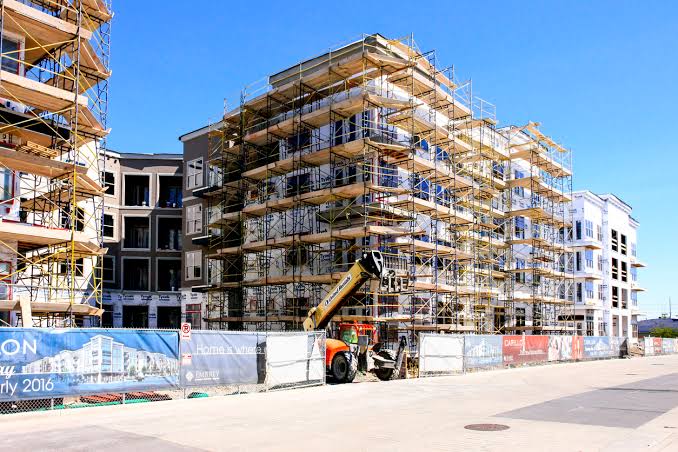
Real Estate in Lagos Nigeria property and construction quality.
Real Estate in Lagos Nigeria: 3 Statistics About Interest Rates and Financing
Financing conditions can determine whether a buyer purchases immediately, delays the transaction or chooses a less expensive property. The Central Bank of Nigeria’s monetary policy rate is an important economic indicator. It is not the same as the interest rate an individual buyer will receive from a bank or mortgage provider.
7. The Central Bank of Nigeria set its Monetary Policy Rate at 23% in September 2026. The decision followed the Monetary Policy Committee meeting held on September 21–22, 2026. The rate influences broader financial conditions, but lenders determine their own borrowing terms. Buyers should compare mortgage offers, repayment periods, fees and eligibility requirements. Source: Central Bank of Nigeria.
8. The policy rate was previously 26.5% in July 2026. The Central Bank of Nigeria’s published decisions show that the rate was retained at that level in July. The September decision therefore marked a reduction of 3.5 percentage points from the July rate. This change alone does not establish that mortgage loans became cheaper by the same amount.
9. The policy rate stood at 27% in November 2025. The Central Bank’s historical decisions provide a useful comparison with its September 2026 position. However, monetary policy changes do not automatically translate into lower property prices or affordable mortgages. Buyers considering Real Estate in Lagos Nigeria should obtain written financing terms before relying on expected rate changes.
Before accepting a loan, calculate the full repayment obligation. Include the deposit, monthly installments, insurance, processing charges and other lender fees. Test whether repayments remain manageable if your income falls or other expenses rise. Buyers using personal savings should also retain an emergency reserve instead of spending every available naira on the purchase.
A practical financing review should answer these questions:
- What deposit is required?
- Is the interest rate fixed or variable?
- What is the total repayment over the loan term?
- Are early repayment or processing fees applicable?
- Can you afford the property without relying on uncertain future income?
For Real Estate in Lagos Nigeria, financing decisions should reflect your actual income and risk tolerance. A large loan can make a desirable property accessible, but it can also place long-term pressure on household finances.
Real Estate in Lagos Nigeria: 3 Statistics About Economic Growth and Investment
Real estate is connected to employment, household spending, construction, finance and business activity. Government economic reports help buyers understand the sector’s broader importance. However, national economic output does not reveal the likely return on an individual apartment, plot or commercial building.
10. Real estate services accounted for approximately 13.4% of Nigeria’s GDP, according to a 2026 statement by the Federal Government. The Minister of Housing and Urban Development cited the figure while discussing reforms in the built environment. The estimate describes the national economy, not Lagos alone. It nevertheless illustrates why property investment and housing policy matter to Nigeria’s economic development. Source: Federal Ministry of Information and National Orientation.
11. Real estate services were valued at approximately ₦41 trillion following GDP rebasing. The Federal Government referenced this estimate while discussing the sector’s contribution to the economy. The figure is an economic-output measure, not the total market value of all homes and land available for sale. Buyers should avoid treating sector output as evidence that every property investment will deliver strong returns.
12. Real estate and construction together contributed more than ₦77 trillion to the economy in 2025, according to the same government statement. The combined figure shows the scale of these connected activities. It does not represent government revenue, property sales or profit earned by developers. For Real Estate in Lagos Nigeria, the distinction matters because a large sector can still contain projects with poor documentation, weak demand or excessive costs.

A Lagos residential development with roads, drainage and completed buildings.
Economic scale should encourage research rather than blind optimism. A growing sector can offer opportunities, but buyers still need to assess the location, property condition, legal status and realistic demand. Ask whether the property solves a genuine housing or business need. Consider who would rent or buy it later, and at what price.
A sensible investment review should compare expected income against all relevant expenses. Include maintenance, service charges, vacancy periods, insurance, taxes and repairs where applicable. For land, assess access, planning restrictions and the time required before development becomes practical. These checks provide a stronger basis for decisions than national growth figures alone.
Real Estate in Lagos Nigeria: 3 Statistics About Regulation and Buyer Protection
A property’s financial appeal means little if the buyer cannot establish valid ownership or use the land as intended. Government housing publications identify land-title constraints and the need for stronger housing data as continuing sector concerns. These issues make document verification and regulatory checks essential parts of Real Estate in Lagos Nigeria.
13. The National Housing Data Technical Committee was created to improve the reliability of housing information. The Federal Ministry of Housing and Urban Development established the committee in August 2024. Its work draws on multiple public institutions and seeks to support evidence-based housing policy. Reliable information helps decision-makers, but buyers must still verify individual properties independently. Source: Federal Ministry of Housing and Urban Development.
14. The committee’s national housing-deficit estimate for 2025 was based on validated data sources. The Federal Government said the work used national household surveys, population and housing census data, and housing adequacy indices. This approach underlines why buyers should ask how property claims were established. An agent’s verbal assurance is not a substitute for official records or professional checks.
15. The government identified the National Housing Data Centre as a planned platform for standardising housing information. The initiative is intended to aggregate data on housing and mortgage markets. It aims to support planning, housing delivery and long-term finance. Buyers should check the responsible agency’s current publications for implementation updates rather than assume every property record is already available in one database.
Before paying for land or a building, consider these essential checks:
- Ask a qualified property lawyer to review the title documents.
- Confirm the seller’s identity and authority to sell.
- Verify the survey and property boundaries with appropriate professionals.
- Check applicable planning permissions and development restrictions.
- Confirm relevant records with the appropriate Lagos State authorities.
- Obtain receipts and written agreements for every payment.
Government statistics can explain market pressures, but they cannot confirm that a seller owns a particular property. Buyers should independently verify title, planning status, boundaries and outstanding obligations. Where a transaction involves uncertainty, pause payment until the issue has been resolved by qualified professionals. Ultimately, Real Estate in Lagos Nigeria requires more than following prices or predicting appreciation. Buyers should combine verified government information with property-specific inspections, realistic budgeting and legal due diligence. The strongest purchase is one that meets your needs, fits your finances and has documents that withstand careful examination.